
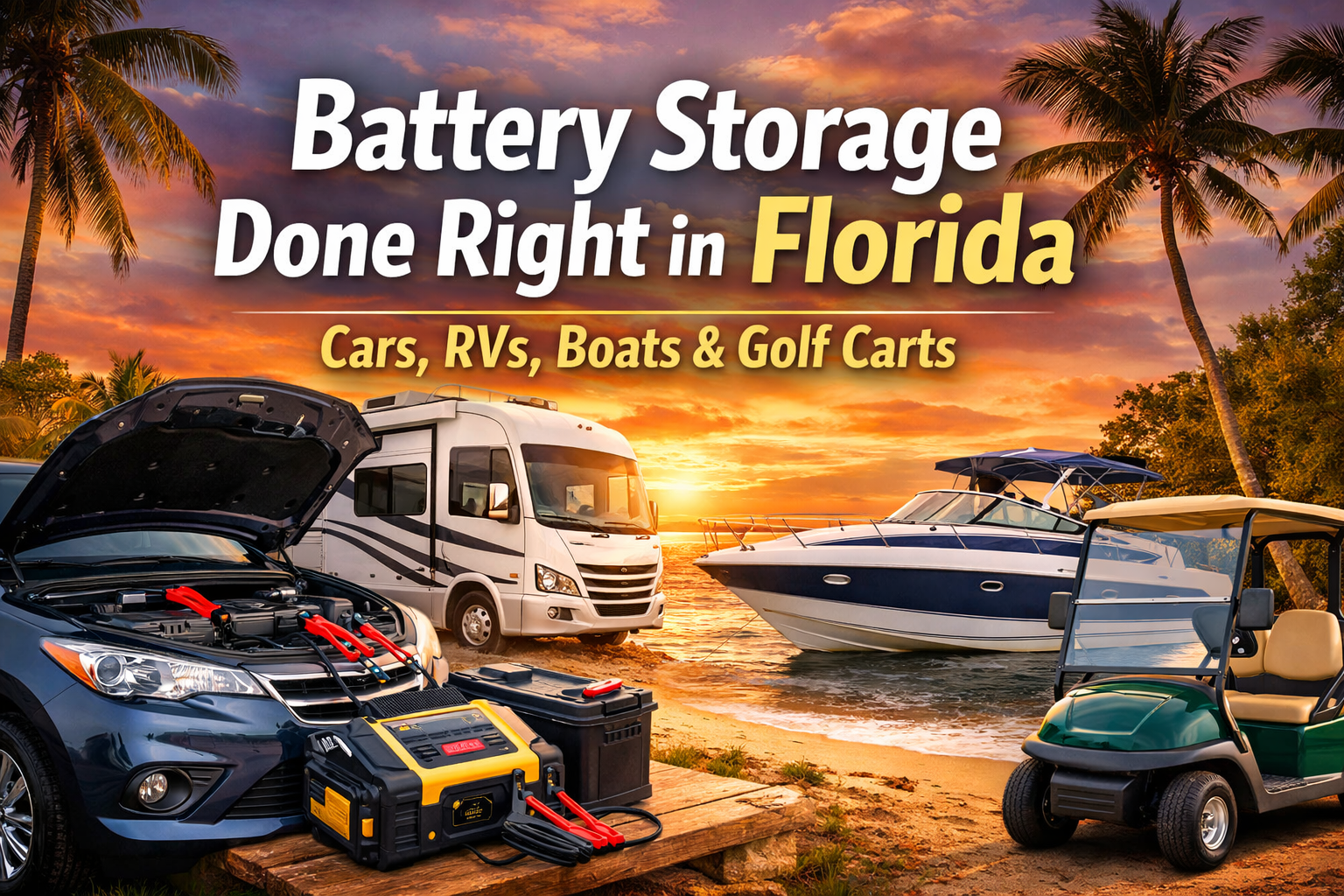
Battery Storage Done Right in Florida Cars, RVs, Boats, and Golf Carts
Most batteries don’t fail because they’re “bad.” They fail quietly during storage — especially in Florida.
Heat, humidity, short usage cycles, and long idle periods combine to damage batteries while vehicles sit unused. This guide explains how to store batteries correctly in Florida, how storage rules differ by vehicle type, and why common habits often do more harm than good.
Why Battery Storage Is Harder in Florida
Batteries naturally lose charge over time, even when disconnected. In Florida, heat accelerates that loss by speeding up internal chemical reactions. High humidity worsens corrosion at terminals and cable ends, increasing resistance and reducing usable capacity.
This is why batteries that “worked fine when parked” often fail weeks or months later. The damage happened quietly while sitting.
Should You Disconnect the Battery During Storage?
Disconnecting the battery removes parasitic electrical drain, but it does not stop self-discharge caused by heat. In Florida, disconnecting alone is often not enough for storage longer than a few weeks.
This is why many Florida owners combine both: disconnect to stop drain, and maintain charge with a regulated charger.
How to Store a Car Battery in Florida
Modern cars draw power even when parked. Alarms, computers, keyless entry, and infotainment memory slowly drain the battery. Starting the car occasionally does not reliably recharge what was lost.
Reality: Short starts often drain more than they recharge.
For vehicles sitting more than 2–3 weeks, a smart maintainer is the safest option.
How to Store RV Batteries in Hot Weather
RV batteries fail most often during storage. Propane detectors, control boards, and inverters continue drawing power even when the RV appears off.
Without temperature regulation, batteries overheat, lose water, and sulfate.
How to Store Boat Batteries in Florida Humidity
Boats face corrosion, vibration, and long idle periods. Humidity accelerates terminal corrosion and internal degradation.
How to Store Golf Cart Batteries When Not in Use
Golf carts are Florida’s most storage-damaged battery category. Weekend use combined with partial charging leads to rapid sulfation.
Florida Seasonal Battery Storage Checklist
- Fully charge before leaving
- Disconnect or install maintainer
- Store in shade
- Check water levels (flooded)
- Fully charge before storms
- Disconnect to avoid surge damage
- Keep batteries above flood level
- Inspect terminals after storms
Not Sure How to Store Your Battery Safely?
Batteries Inc Orlando helps Florida drivers, boaters, RV owners, and golf cart owners prevent storage-related battery failure every day. If you’re unsure whether disconnecting, charging, or replacing makes sense, call us before damage happens.